Austin Location
608 West 12th Street, Suite B Austin, TX 78701
Georgetown Location
706 Rock St, Georgetown, TX 78626
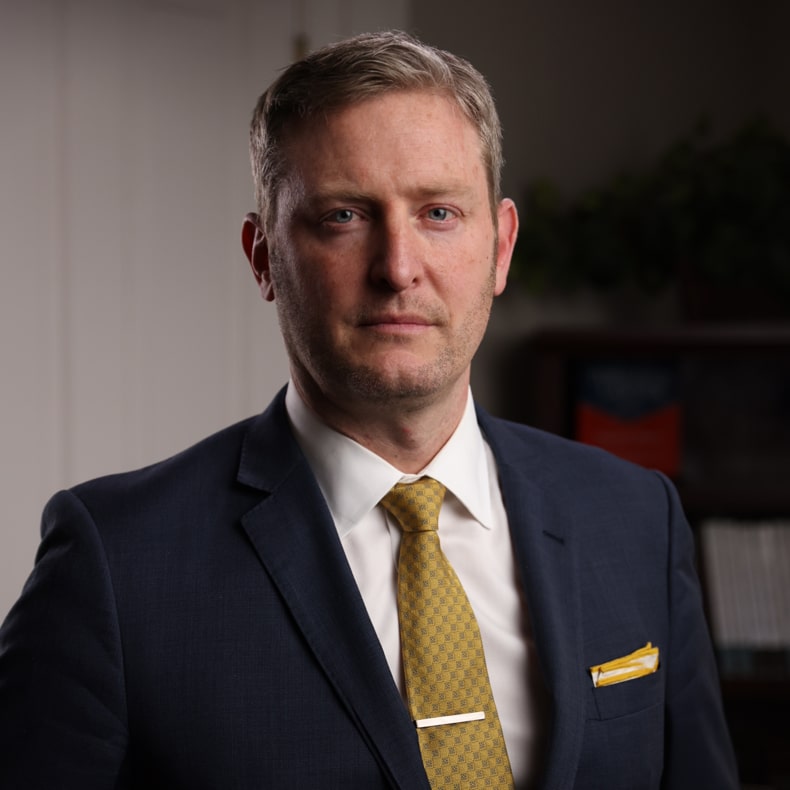
Managing Attorney, Law Office of David D. White, PLLC
Born and raised in Austin. Criminal defense only, since 2004. Representing clients in state and federal criminal matters across Travis, Williamson, Hays, Caldwell, Lee, Coryell, Bell, Burnet, Milam, and Bastrop counties. Offices in Austin and Georgetown. Free consultation.
Call (512) 369-3737
In a legal market where most attorneys moved here from somewhere else, David is from here. He was born David Daniel White and raised in Austin. He attended Westlake High School from 1993 to 1997, where he played on the 1996 state championship football team. He left Austin for college at Austin College in Sherman, Texas, where he majored in business and Spanish from 1997 to 2001 and was an all-conference baseball player. He returned to Texas for law school and has practiced law in Austin since being admitted to the State Bar of Texas in 2004.
Being from Austin matters in criminal defense work because the people, the courts, the judges, the prosecutors, and the local procedures of Travis and Williamson Counties are a known landscape rather than a learning curve.
David always knew he wanted to pursue criminal law when he entered Texas Tech University School of Law. What he wasn’t sure about — until the school’s prosecution clinic forced the choice — was which side of the courtroom.
He jumped at the opportunity. He learned the mechanics of prosecution and tried misdemeanors as a law student. But what he actually learned in that clinic wasn’t how to prosecute. It was what happens when prosecutors take easy wins on weak evidence and defense attorneys don’t push back.
He watched indigent defendants take pleas they shouldn’t have taken because their court-appointed attorney hadn’t read the file. He watched cases get resolved in five-minute hallway conversations where neither side had bothered to look at the bodycam. He watched the system work the way it works when nobody’s putting in the time.
That clinic ended his uncertainty. He left it knowing he would only ever practice on the defense side, and knowing what kind of defense lawyer he refused to be.
What he saw in that clinic became the firm’s intake discipline. Before David quotes a fee on any case, he reads the Probable Cause Affidavit. Before he recommends a plea, he reads the police report, the warrant affidavit, the lab analysis, and the body camera footage. Twenty-two years later, the firm’s three attorneys review every active case together, every week, before any of them appears at a setting. He built the firm to make sure no client of theirs ever sits where those defendants sat.
David’s practice has been exclusively criminal defense since the beginning. He handles DWI cases at every level from first offense through felony enhancement, drug offenses from possession through distribution, assault and family violence, sexual assault, aggravated robbery and other violent felonies, federal criminal charges, and Texas Full Pardon applications with the Board of Pardons and Paroles. He has tried cases to juries in state district courts, county courts, and federal court.
The defense-only commitment is a deliberate choice rather than a temporary posture. David has never served as a prosecutor at any point in his career. He does not handle family law, personal injury, or any other practice area. The entire practice is built around defending people accused of crimes.
David has provided comment to local media outlets including KXAN on Texas criminal defense matters. Media mentions are documented on the firm’s Media page.
David has come to a specific answer to the question of what makes a great criminal defense attorney. It isn’t the lawyer with the most trials, or the one who knows everybody at the courthouse, or the one whose advertising you see most often. The best criminal defense attorney is the one who gives the client every bite at the apple the system provides. The judicial process has multiple stages where a case can resolve favorably, and each one requires a different kind of work. A lawyer who only knows how to try cases is bringing one tool to a fight that needs five.
At this firm, David and his team work every phase. Before a warrant becomes an arrest, the firm reviews the probable cause affidavit for false statements, hearsay problems, or insufficient information — and when they find something, they move to get charges rejected before the client is ever booked. The firm has had cases where the client retained them with an active warrant and the matter was resolved pre-arrest. The client never spent a night in jail, never had a booking photo taken.
On felonies, the firm makes a deliberate decision about grand jury strategy: whether to submit a packet of exculpatory evidence, whether to have the client testify, whether to let the case proceed to indictment and challenge it later. Most cases don’t qualify for grand jury intervention. The ones that do can end before a public charge is ever filed.
In the pretrial phase, David and his team evaluate every program each county has. Veterans Court for clients with service connections. DWI Court for repeat alcohol cases. Youthful Offender Court. Mental Health Court for clients whose case profile indicates a treatment need rather than a punishment fit. Pretrial Diversion. Deferred Prosecution. These programs aren’t right for every client, and the firm doesn’t push them when they aren’t. But when one fits, it can resolve a case far better than any plea bargain or trial outcome would.
Pretrial motions, suppression hearings, and grand jury work are where most cases actually resolve in a client’s favor. Trial is one outcome. It’s not the only one, and it’s not always the best one. David’s discipline is doing the work at every phase so that when a case does need to be tried, the trial itself is built on the foundation of every motion, every hearing, and every negotiation that came before it.
When a client hires this firm, they’re hiring three attorneys who work the case at every stage the system provides.
At the first meeting, David tells every client the same thing: he doesn’t care if their case takes two weeks or two years to resolve. The firm cares about getting the right result. That’s the principle the firm’s fee structure is built on.
Every case at this firm is handled on a flat fee, paid up front. Once the fee is paid, the firm has no financial reason to extend a case or rush it. David and his team work the case until they have the right outcome. Sometimes that’s fast — between retention and the State’s review, the firm has resolved cases before an arrest was ever made. Sometimes it’s slow.
Most cases take longer. The average misdemeanor or felony in Travis County resolves in six to fifteen months, and most other Central Texas counties fall in the same range. Discovery alone can be substantial — a single DWI case might involve 90 minutes of body camera footage, dashcam video, in-car audio, breath test maintenance records going back six months, and the technical supervisor’s certification history. Pretrial motions, expert review, prosecutor negotiation, and grand jury work can all extend a case for legitimate reasons.
David tells clients that time is often their friend. Things that can happen as a case ages: a more reasonable prosecutor gets reassigned, a complaining witness loses interest in cooperating, a client uses the time to complete counseling or community service or other mitigating work that strengthens the negotiating position. Pushing for a fast plea on a case that needs time to develop trades the client’s outcome for the firm’s convenience.
That trade is the one David refused to make as a law student watching it happen in the Texas Tech prosecution clinic, and it’s the one this firm’s fee structure makes structurally impossible. The firm will not push an unfavorable plea to clear its docket. David built the firm so it wouldn’t have to.
Results depend on the specific facts of each case. Past outcomes do not guarantee or predict the result of any future matter.
The firm’s Case Results page documents specific outcomes from David’s practice, including dismissals, reversals, and suppression wins across DWI, drug, felony, federal, and pardon matters. Selected examples include:
Past results do not guarantee a similar outcome in any future case. Each case depends on its own facts, the applicable law, and the discretion of the prosecutors and courts involved.
David has always had a passion for criminal defense work. In his own words: “Everybody makes mistakes. Nobody is perfect. I would not want to be judged on a lapse of judgment on my worst day, and I do not think my clients should be judged that way either.”
The presumption of innocence is a real thing, not a slogan. The right to counsel is a real thing, not a formality. Most people walking into a criminal defense office are there on the worst day of their lives. David’s job is to listen first, to explain the real landscape of the case honestly, to advise on the real options available, and to represent the client through whatever procedural path the case requires.
David treats clients as people, not case numbers. He listens rather than lectures. He answers his phone, returns calls and messages, and reads every case carefully before developing strategy.
The firm’s three attorneys, David White, Kenneth Hines, and Taylor Kacir, work each case together through weekly case reviews and shared notes in Clio. When the attorney appears at your setting, they have been on your case from intake. Coverage is by preference: David primarily handles Travis County matters; Taylor is in the Georgetown office daily and primarily handles Williamson, Bell, Lee, Coryell, and Bastrop counties; Kenneth primarily handles Travis, Hays, and Caldwell, and leads the firm’s expunction work.
The goal of the first meeting is practical. A client leaving David’s office should have a clearer understanding of the case, a realistic picture of the possible outcomes, and a defense plan that addresses the specific facts and charges.
The firm has more than 250 five-star client reviews across Google, Avvo, and other legal review platforms, reflecting a consistent pattern of clients who arrive in crisis and leave the office with a plan.
David has given more than 20 speeches to University of Texas students on criminal defense practice and the realities of the Texas criminal justice system. He donates regularly to local elementary schools and is active in supporting Austin-area education.
“I interviewed 8 attorneys before hiring The Law Office of David White.”
— Alley C., June 2024
“I contacted several offices in January to help me file for expunction. David contacted me almost immediately.”
— Emma D., March 2025
“Treats clients with respect and kept me informed from the beginning. Followed through with the results to back it up earlier than anticipated.”
— Ryan D., October 2024
Reviews above are selected from the firm’s Google Reviews page. Past results do not guarantee a similar outcome in any future case.
Phone: (512) 369-3737
Austin Office: 608 W 12th Street, Suite B, Austin, Texas 78701
Georgetown Office: 706 Rock Street, Georgetown, Texas 78626
Consultations are free.
608 West 12th Street, Suite B Austin, TX 78701
706 Rock St, Georgetown, TX 78626